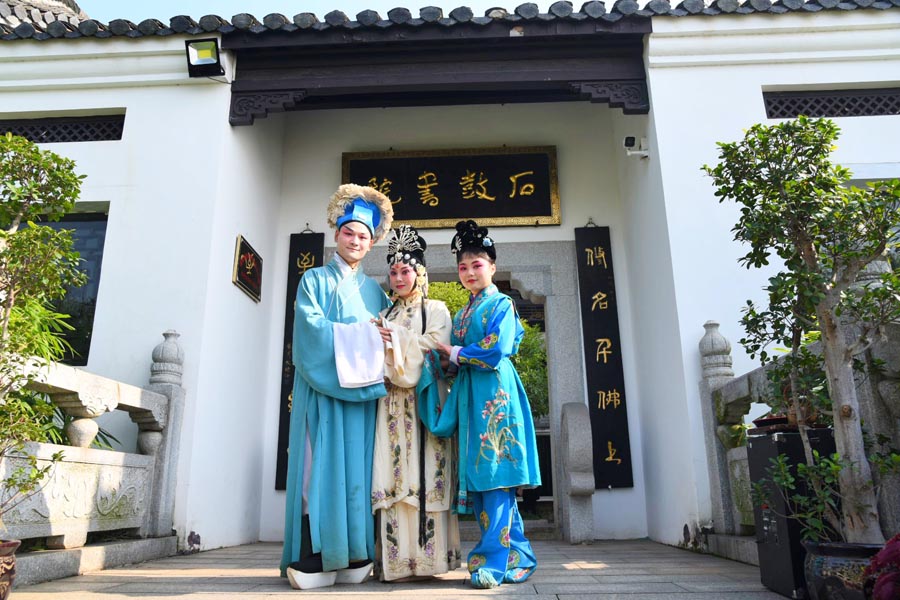
Shigu Academy
Introduction
Shigu Academy, located in Hengyang city, Hunan province, is one of the most historically significant educational institutions in ancient China. Established during the Tang Dynasty (618–907), the academy boasts a history spanning over 1,200 years and has endured through six dynasties, including the Tang, Song, Yuan, Ming, and Qing dynasties. It reached its zenith during the Song Dynasty (960–1279), earning its place among the four great academies of ancient China alongside Yuelu Academy, Bailudong Academy, and Songyang Academy.
The academy has been a hub for intellectual and cultural exchange, attracting renowned scholars, poets, and celebrities throughout history. Esteemed teachers such as Su Shi, Zhou Dunyi, and Zhu Xi taught at the academy, while notable figures like Zhuge Liang, Du Fu, Han Yu, Liu Zongyuan, Liu Yuxi, Xin Qiji, and Wen Tianxiang visited, drawn by its reputation. Despite the destruction of the original academy in 1944 during the Japanese bombings, Shigu Academy was rebuilt on its ruins in 2006, restoring its function as a center for education and cultural activities.
Architecture
The architectural design of Shigu Academy reflects the traditional Chinese aesthetic and cultural values. The rebuilt academy, completed in 2006, was constructed to honor the original structure's historical significance while incorporating modern elements to support its educational and cultural functions. The layout of the academy is characterized by symmetrical designs, intricate carvings, and classical Chinese architectural features such as tiled roofs, wooden beams, and courtyards. These elements create a serene and scholarly atmosphere, befitting its role as a center of learning and cultural preservation.
Shigu Academy's location on Shigu Mountain further enhances its architectural appeal. The convergence of the Zengshui, Xiangshui, and Leishui rivers provides a natural backdrop that complements the academy's design. The surrounding landscape, with its lush vegetation and flowing waters, adds to the aesthetic harmony of the site, making it a place of inspiration for scholars and visitors alike. The academy's reconstruction aimed to preserve the essence of its historical architecture while adapting to contemporary needs, ensuring its legacy as a cultural and educational landmark.
Cultural Influence
As one of the four great academies of ancient China, Shigu Academy was instrumental in the dissemination of Confucian ideals and classical education. The academy integrated Confucian classics with teaching, fostering a spirit of patriotism and pioneering thought that has influenced generations of Chinese scholars and leaders. Renowned philosophers and educators such as Su Shi, Zhou Dunyi, and Zhu Xi contributed to the academy's intellectual legacy, while its alumni, including Wang Juren, Peng Yulin, and Qi Baishi, went on to make significant contributions to Chinese culture and society.
The academy's reputation attracted many eminent figures, including poets and statesmen like Zhuge Liang, Du Fu, Han Yu, and Wen Tianxiang, who visited to engage in scholarly discourse and draw inspiration from its serene environment. The cultural significance of Shigu Academy extends beyond its historical role as an educational institution; it has become a symbol of Hunan's rich cultural heritage and a testament to the enduring value of traditional Chinese education and philosophy.








